Cheese Glossary


Appenzell
Asiago
Bleu d'Auvergne
Blue
Blue Castello
Bocconcini
Boursault
Boursin
Brie
Caerphilly
Cambazola
Camembert
Chaumes
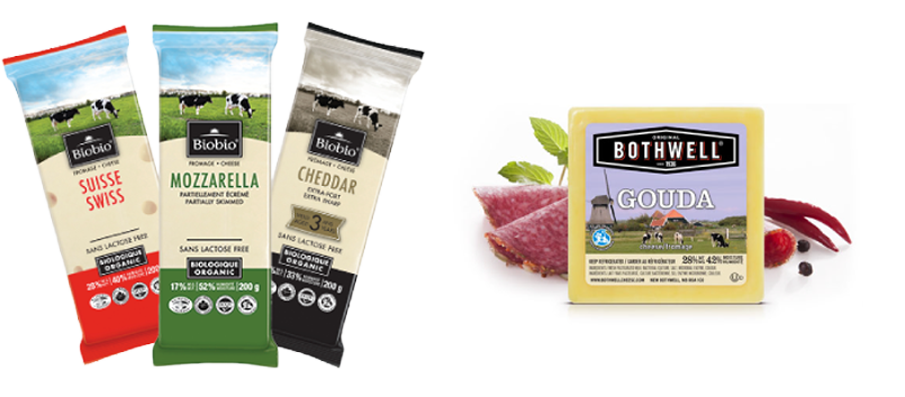
Cheddar
Cheshire
Chevres
Colby
Cream Cheese
Curd
Danbo
Derby
Douanier
Edam
Emmental
Esrom
Feta
Fontina Val d'Aosta
Fourme d'Ambert
Gloucester
Gorgonzola
 
Gouda
Gruyere
Havarti
Jarlsberg

Lancashire
Lappi
Leicester
Maasdam
Manchego
Marble Cheddar
Marbled Cheeses
Mascarpone
Monterey Jack
Morbier
Mozzarella
Ossau-Iraty
Parmesan
Provolone
Raclette
Ricotta
Ridder
Romano
Roquefort
Roule
Sbrinz
Shropshire Blue
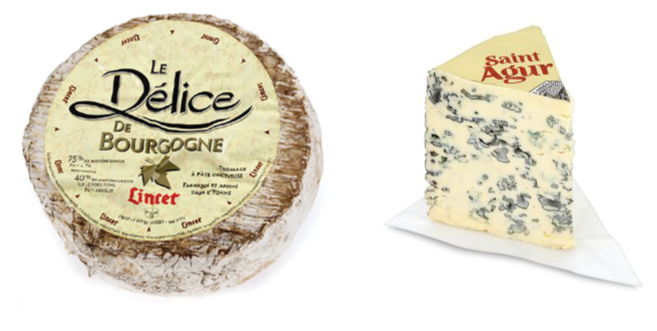
St. Agur Blue Cheese
Stilton
Tete de Moine
Tilsit
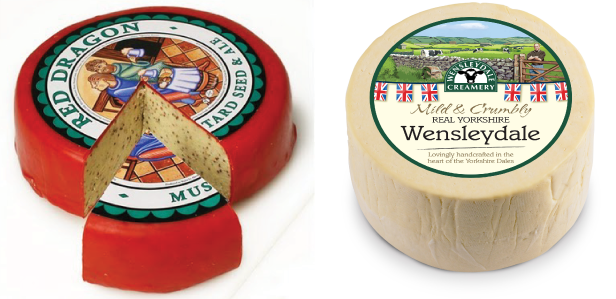
Wensleydale


top

Appenzell/Appenzeller

Description:
There are two types of Appenzell: common (made with skim milk and brine-cured for 12 months and festive (full milk cured with brine as well as pepper and the sediment from the white wine-making process). The cheese originates in the north-eastern Swiss canton of the Appenzell near the Liechtenstein border but, today is also made in the canton of St Gallen (which is a siege of a special authority protecting a genuity of Appenzell).
 

Country:

Switzerland

Milk:

cow milk

Texture:

semi-hard


top

Asiago

Description:
Asiago is made in the region of Vicenza and Trento. It is a traditional, farmhouse and creamery, unpasteurized, hard cheese. Originally made of ewe's milk, now is made entirely of cow's milk. There are two types of Asiago: first one (mistakenly taken for Pressato) is a lightly pressed cheese made from whole milk matured for 20-30 days. Another one (Asiago d'Allevo) is the mature cheese made with skimmed milk. Long and slow maturation process creates fruity, slightly sharp cheese with a compact, granular interior full of small holes. Matured over 2 years, becomes intensely flavored. Can be grated and used as a condiment.
 

Country:

Italy

Milk:

cow milk

Texture:

hard


top

Bleu d'Auvergne

Description:
Bleu d'Auvergne is a traditional, farmhouse and creamery, blue cheese. This is a moist, creamy cheese with an even spread of veins. It's taste is tart and gluey, with a hint of herbs and melted butter. With age, the crust becomes sticky and eventually the interior gradually collapses and the taste becomes more intense and spicy. This cheese is delicious in salads with nuts or raw mushrooms. It can be also used as a seasoning for pasta.
 

Country:

France

Milk:

cow milk

Texture:

soft

Fat content:

50 %


top

Blue

Description:
It is a white cheese with blue veins and sometimes crumbly interior. This cheese usually has tangy, piquant, spicy and peppery flavor. Use in salad dressings with cream cheese for spreads.
 

Texture:

hard


top

Blue Castello

Description:
Modern, creamery, blue cheese made from cow's milk. It is a half-moon-shaped cheese. The moist, natural rind may develop some gray, brown or white moulds. The cheese was developed in 1960's. Blue Castello has a Brie-like texture, with the blue in fairly thick, horizontal lines. Enriched with cream. The aroma is of mushrooms and the taste is mildly spicy.
 

Country:

Denmark

Milk:

cow milk

Texture:

soft

Fat content:

70 %


top

Bocconcini

Description:
Bocconcini is a fresh Mozzarella that comes in various sizes, packed in either water or brine. Other fresh mozzarella, such as Fiore di Latte Trecce, etc. are Bocconcini in different shapes.
 

Country:

Italy


top

Boursault

Description:
Soft-whit, creamery cheese made from cow's milk. This cheese has a mild flavor, reminiscent of Brie and a slight acidity. It was named after its creator and maker, Henri Boursault in 1953. Affinage of this cheese takes about two months. The taste is smooth and almost buttery, with a hint of mushrooms. The interior is solid rather than supple and it has a refreshing citrus tang. The cheese has a cylindrical shape with light, white penicillin mould rind with pinkish tones. Boursault is also known as Lucullus.
 

Country:

France

Milk:

cow milk

Texture:

soft

Fat content:

70 %


top

Boursin

Description:
Boursin is a modern, creamery, fresh cheese of cylindrical shape without rind. It is made with garlic and herbs or even black pepper. It is a soft industrial cheese with no affinage. The cheese was founded by Monsier Boursin in 1957. It has a rich, sweet flavor with a hint of acidity. This cheese is sold in an corrugated-foil wrapper and it is used as a table cheese for spreading and baking. It goes good with white wine.
 

Country:

France

Milk:

cow milk

Texture:

soft

Fat content:

70 %


top

Brie

Description:
Brie is the best known French cheese and has a nickname "The Queen of Cheeses". Several hundred years ago, Brie was one of the tributes which had to be paid to the French kings. In France, Brie is very different from the cheese exported to the United States. "Real" French Brie is unstabilized and the flavor is complex when the surface turns slightly brown. When the cheese is still pure-white, it is not matured. If the cheese is cut before the maturing process is finished, it will never develop properly. Exported Brie, however, is stabilized and never matures. Stabilized Brie has a much longer shelf life and is not susceptible to bacteriological infections. Brie, one of the great dessert cheeses, comes as either a 1 or 2 kilogram wheel and is packed in a wooden box. In order to enjoy the taste fully, Brie must be served at room temperature.
 

Country:

France

Milk:

cow milk

Texture:

soft

Fat content:

45 %


top

Caerphilly

Description:
Traditional, farmhouse, unpasteurized, vegetarian cheese made from cow's milk. It usually has a wheel-shape with ivory-white rind dusted with fine flour. As the cheeses are aged in a moist cellar, the white and gray moulds become thicker and more leathery. This cheese is known as "the crumblies". These cheeses originate from South and West Wales. It was first made in Caerphilly in about 1830. When young, Caerphilly has a fresh taste, the texture is moist yet supple. With maturity the edges become creamy and the flavor becomes more rounded.
 

Country:

Wales

Milk:

cow milk

Texture:

hard

Fat content:

48 %


top

Cambazola

Description:
Cambazola is a modern, creamery, blue cheese made from cow's milk. It has a flat round shape with penicillin rind. The cheese was created in 1970's. The texture is smooth and rich and the taste is spicy and slightly sweet-sour.
 

Country:

Germany

Milk:

cow milk


top

Camembert

Description:
A very famous French cheese, Camembert dates back to the 18th century and is named for a Norman village in which there is a statue of the creator of this particular variety (Marie Harel). Originally, this cheese was dry and yellow-brown, but after a few modifications it became softer and more earthy. In 1855 one of Marie Harel's daughters presented Napoleon with a piece of that cheese, saying that it came from village called Camembert. He liked it a lot and from that moment Camembert became known by its contemporary name. At the beginning of its ripening, Camembert is crumbly and soft and gets creamier over time (usually 2-3 weeks). A genuine Camembert has a delicate salty taste.
 

Country:

France

Milk:

cow milk

Texture:

soft

Fat content:

45 %


top

Chaumes

Description:
One of the most popular cheeses in France, produced by the "Fromageries des Chaumes", one of the most famous and the biggest cheesemaking company. The soft rind is bright tangerine-orange and the interior is smooth, supple and quite rubbery. The nutty, almost meaty taste and aroma are mild. Affinage takes four weeks. It is used as a table cheese and also for grilling.
 

Country:

France

Milk:

goat milk

Texture:

semi-hard

Fat content:

50 %


top

Cheddar

Description:
The most widely purchased and eaten cheese in the world. Cheddar cheeses were originally made in England, however today they are manufactured in many countries all over the world. Fully cured Cheddar is a hard, natural cheese. It is shaped like a drum, 15 inches in diameter, with natural rind bound in cloth. Normally, the color of Cheddar ranges from white to pale yellow. Some Cheddars, however, have a color added, giving the cheese a yellow-orange color. Cheddar is always made from cow's milk and has a slightly crumbly texture if properly cured. If the cheese is too young, the texture is smooth. Cheddar gets a sharper taste the longer it matures. It is generally matured between 9 and 24 months. The important thing in purchasing Cheddar, is to consider the age of the cheese. Milk is heated to 86 degrees F and inoculated with a lactic starter culture. After an hour rennet is added. When the curd is firm, it is ground down to marble-sized bits which are heated to 100 degrees F. The whey is discarded and it is sliced into slabs. The curd is pressed overnight and stands for 4 days in a cool atmosphere. Unlike other well known cheeses, Cheddar's name is not protected so it has been used and abused by many producers around the world.
 

Country:

England

Milk:

cow milk

Texture:

semi-hard

Fat content:

48 %


top

Cheshire

Description:
One of the oldest English cheeses, invented during the 12th century. There are three types of Cheshire: White, Red (colored with annatto) and Blue which is punctured during the curing process, resulting in blue veins. Cheshire is firm in texture and a bit more crumbly than Cheddar. It is rich, mellow and slightly salty with an excellent aftertaste. It requires two to six months to mature and the taste sharpens during that process.
 

Country:

England

Milk:

cow milk

Texture:

semi-hard

Fat content:

48 %


top

Chevres

Description:
These cheeses are made from goat's milk. They come in many sizes and shapes, such as round patties, log-shapes, drum-shapes, pyramids, round loaves, long loaves etc.; their textures vary from soft, but firm like cream cheese to extremely hard. Chevres are excellent dessert cheeses, often served as snacks or before dinner drinks. Goat cheese is often served as an ingredient in many fine dishes.
 

Country:

France

Milk:

goat milk

Texture:

semi-hard

Fat content:

45 %


top

Colby

Description:
Traditional, creamery, semi-soft cheese made from cow's milk. The sizes vary, but they are generally block-shaped and free of rind. It was named after the town in Wisconsin, USA where it was first made. It is a washed-curd cheese, which means that the curds are thoroughly rinsed in fresh water to remove all excess whey and any stray lactose. This prevents the acidity in the curd from rising, so the cheese remains soft and springy, with a sweet and mild flavor. Colby has a higher moisture content than Cheddar and feels more elastic. It is also sweet, rather than savory. This cheese ripens in four months. It is made with a special procedure: when whey is drained off, the curd cold water is poured on until the temperature dips to 80 degrees F. Colby must be consumed shortly after purchase or it will dry out and lose its flavor.
 

Country:

United States

Milk:

cow milk

Texture:

semi-soft


top

Cream Cheese

Description:
It is a modern, fresh cheese made of cow's milk. It is an acid curd cheese, but unlike cottage cheese, it requires a starter culture of bacteria. It is generally mild and velvety. Sometimes whey powder is added which results in more grainy texture of cheese. Perfect for cheesecakes and baking.
 

Milk:

cow milk

Texture:

soft


top

Curd

Description:
Curd has a mild taste with a semi-soft and creamy texture. It has a white color. This kind of cheese is used, especially for cooking and melting.
 

Texture:

semi-soft


top

Danbo

Description:
Danbo is one of the most popular Danish cheeses. It is a rectangular cheese with smooth, dry, yellow rind and sometimes is covered in red wax. The cheese has a pale, elastic interior with a few small holes. It is used for snacks and breakfast. Affinage takes six weeks to five months and the fat content is about 45 per cent. Other popular Danish cheeses include Svenbo, Fynbo and Elbo.
 

Country:

Denmark

Milk:

cow milk

Texture:

semi-soft


top

Derby

Description:
The cheese has a shape of cylinder with natural rind. It is the first cheese in Britain to be made in factory. This cheese is very similar to Cheddar, but has a softer, flakier curd and a butter taste. Derby ripens in one to six months. A herb-flavored version is called Sage Derby.
 

Country:

England

Milk:

cow milk

Texture:

hard

Fat content:

45 %


top

Douanier

Description:
Le Douanier is an ivory coloured, surface-ripened, washed-rind semi-soft cheese. It has a creamy and tender texture. Its delicate hazelnut flavour becomes stronger with age. It is sold in wheels.


top

Edam

Description:
This is a pressed, semi-hard to hard cheese, made from cow's milk. It comes in a shape of ball covered with distinctive red wax. Edam is produced from skimmed or semi-skimmed milk. It is usually consumed young, when the texture is elastic and supple and the flavor is smooth, sweet and nutty. Black-wax coating means that Edam has been matured for at least 17 weeks. The cheese tastes delicious with a glass of Pinot Noir.
 

Country:

Holland

Milk:

cow milk

Texture:

semi-hard

Fat content:

40 %


top

Emmental

Description:
This cheese is produced in the central cantons of Switzerland. It is a traditional, unpasteurized, hard cheese made from cow's milk. It's hard, thin rind is covered by paper with producer's name on it. The aroma is sweet with tones of fresh-cut hay. The flavor is very fruity, not without a tone of acidity. Emmental has walnut-sized holes. It is considered to be one of the most difficult cheeses to be produced because of it's complicated hole-forming fermentation process. The cheese tastes delicious with a glass of wine, for example Jura Blanc.
 

Country:

Switzerland

Milk:

cow milk

Texture:

hard


top

Esrom

Description:
Traditional, creamery, semi-soft cheese made from cow's milk. It is a rectangular cheese with smooth, sticky, pale yellow color. Esrom has a greasy, yellow-brown rind and is buttery in texture. It has a mild, pleasant taste. Exported Esroms, as a result of their longer maturing may be stronger in flavor. Some Esroms contain garlic, onion or pepper.
 

Country:

Denmark

Milk:

cow milk

Texture:

semi-hard


top

Feta

Description:
Feta is one of the most famous cheeses in Greece. It is made in various sizes, often as a loaf-shape. Feta is solid, but crumbly with some fissures. Pure white, it has a milky fresh acidity. Feta was originally made with either ewe's milk or a mixture of ewe's and goat's milk, but today most feta is made with pasteurized milk and tastes of little besides salt. Some people are put off by the strong salt content but the salt is intended only as a preservative and is not supposed to overpower the taste of the cheese. Feta can be soaked in fresh, cold water or milk for a few minutes or longer, if necessary, to make it less salty. It has a fat content of 40 - 50%.
 

Country:

Greece

Milk:

cow ewe and goat milk

Texture:

soft


top

Fontina Val d'Aosta

Description:
Genuine Fontina comes from the Val d'Aosta region of Italy in the Alps near the French and Swiss borders. Fontina is dense, smooth and slightly elastic. The straw-colored interior with its small round holes has a delicate nuttiness with a hint of mild honey. When melted, as it frequently is, the flavor is earthy with a taste of mushrooms and a fresh acidity. Fontina is the primary ingredient of Italian fonduta and is a pristine table or dessert cheese. Fontina ripens in about three months and has a fat content of 45 per cent.
 

Country:

Italy

Milk:

cow milk

Texture:

semi-soft


top

Fourme d' Ambert

Description:
Fourme d'Ambert is one of France's oldest cheeses (dating from the Roman period). It is traditional, farmhouse and cooperative, blue cheese. Fourme d`Ambert is more supple and dense than more blues. The flavor is savory and nutty. You can easily recognize it by its unusually tall cylindrical shape. Today the cheese is produced with pasteurized milk. The maturing process takes place in humid cellars. The p t is creamy with a lasting taste of wine. Extremely pleasant, this is one of our Cheese Master specialties. The period of maturing is 3 to 4 weeks and every week the cheeses are injected by a syringe, containing Vouvray moelleux. Similar cheeses include Fourme de Montbrison, Bleu de Montbrison, Bleu de Gex and Bleu de Septmoncel.
 

Country:

France

Milk:

cow milk

Texture:

semi-hard

Fat content:

50 %


top

Gloucester

Description:
There are two types of the hard, English cheese Gloucester. Single, that ripens for a period of two months, and Double, with the affinage of six months and more flavorful taste.
 

Country:

England

Milk:

goat milk

Texture:

semi-hard

Fat content:

48 %


top

Gorgonzola

Description:
Gorgonzola is a traditional, creamery and co-operative, blue cheese. The greenish-blue penicillin mould imparts a sharp, spicy flavor and provides an excellent contrast to the rich, creamy cheese. Gorgonzola is made in the northern Italian village, according to which the cheese has its name, either from unpasteurized or pasteurized milk to which the mould is added. At about four weeks the cheeses are pierced with thick needles to encourage the spread of the mould. Gorgonzola ripens in three to six months. The cheese is usually wrapped in foil to keep it moist. Its color ranges from white to straw-yellow with an unmistakable marbled green or bluish-green mould. The taste ranges from mild to sharp, depending on age. Gorgonzola is also excellent in salads and dips.
 

Country:

Italy

Milk:

cow milk

Texture:

soft

Fat content:

48 %


top

Gouda

Description:
Named after the Dutch town of Gouda, just outside Rotterdam. It accounts for more than 60% of the cheese produced in Holland and it has a very long history. Gouda is a traditional, creamery, hard cheese. It is round with very smooth, yellow, waxed rind. The flavor is sweet and fruity. As time passes, the taste intensifies and becomes more complex. Mature Gouda (18 months plus) is coated in black wax which provides a stark contrast to the deep yellow interior. Gouda is considered to be one of the world's great cheeses. It is both a table cheese and a dessert cheese, excellent with fruit and wine. Gouda is now made globally in a style similar to the creation of Edam.
 

Country:

Holland

Milk:

cow milk

Texture:

semi-hard

Fat content:

40 %


top

Gruyere

Description:
Gruyere is named after a Swiss village. It is traditional, creamery, unpasteurized, semi-soft cheese. The natural, rusty brown rind is hard, dry and pitted with tiny holes. The cheese is darker yellow than Emmental but the texture is more dense and compact. Slightly grainy, the cheese has a wonderful complexity of flavors - at first fruity, later becomes more earthy and nutty. To make Gruyere, raw milk is heated to 93 degrees F and liquid rennet is added for curdling. The resulting curd is cut into small pieces which release whey while being stirred. Curd is cooked at 110 degrees F and raised quickly to 130 degrees F. The pieces become shriveled which is the cue to place the curd in molds for pressing. The cheese is salted in brine for 8 days and ripened for two months at room temperature or a quick method: 10 days at 50 degrees F. Curing lasts from 3 to 10 months (the longer the curing period the better the cheese).
 

Country:

Switzerland

Milk:

cow milk

Texture:

hard


top

Havarti

Description:
Havarti is a traditional, creamery and semi-soft. It is a simple, washed-rind cheese with irregular holes throughout. There is an enriched version, with added cream which is softer and feels more luxurious in the mouth. There is also a version with caraway seeds. Havarti is named after the farm in Denmark where Hanne Nielsen first made it.
 

Country:

Denmark

Milk:

cow milk

Texture:

semi-soft


top

Jarlsberg

Description:
Jarlsberg is a traditional, creamery, hard, Norwegian cheese. The world's most famous "Baby Swiss", Jarlsberg has the consistency texture and hole formation of Swiss Emmental but its flavor is more nut-like and sweeter. The paste is golden yellow with holes of various sizes. A full wheel of Jarlsberg weighs about 20 lbs., one tenth the weight of a wheel of Emmental. Jarlsberg can be used as a table cheese, dessert cheese or sandwich cheese. Serve it with wine, beer or aquavit. Great deal of this cheese is exported all over the world, especially to the U.S.A.
 

Country:

Norway

Milk:

cow milk

Texture:

hard


top

Lancashire

Description:
The hard, thin, natural rind is pale gold. It bears the marks of the cloth. When young, the traditional cheese is described as "Creamy Lancashire". At this stage, the texture is moist and crumbly. As the cheese matures, the flavor intensifies and the cheese becomes harder, and it's flavor intensifies. Mass-produced Lancashire has a mild, flat flavor, while farmhouse Lancashire has a robust full taste. Mrs. Kirkham and Dew-Lay are the only two Lancashire makers who use a combination of three day's curd to give a unique, slightly mottled texture. As the curds ripen at different times it acquires a multi-dimensional flavor that is sharp and peppery.
 

Country:

England

Milk:

cow milk

Texture:

hard

Fat content:

45 %


top

Lappi

Description:
Lappi is a semi-soft, semi-sweet cheese that slices easily and is excellent for melting. It comes from Finland's Lapland region.
 

Country:

Finland

Texture:

semi-soft


top

Leicester

Description:
A natural, hard cheese. The bright, orange-red rind has fine, powdery moulds. Raspy, moist-textured, Leicester is made in a similar fashion to Cheddar and comes covered in a hard, dry rind. Leicester has a rich, mild flavor with a flaky texture and a deep orange color, due to natural dye annatto. Traditional makers of Red Leicester include Quicke and Overton Hall. This cheese can be eaten young, but it should ideally be left to mature for six to nine months. This cheese is excellent with fruit and beer.
 

Country:

England

Milk:

cow milk

Texture:

hard

Fat content:

48 %


top

Maasdam

Description:
Modern, creamery, semi-hard cheese made from cow's milk. It is boulder-shaped cheese. The smooth, natural rind is polished and may be waxed. The cheese was created in the early 1990's as an alternative to more expensive Swiss cheese Emmental. Although there are similarities with Emmental, it is higher in moisture and therefore, more supple. It ripens faster than other Dutch cheeses, being ready in four to 12 weeks. The flavor is sweet and buttery, with a fruity background, making it ideal for serving as a snack or breakfast cheese. It can also be grilled.
 

Country:

Holland

Milk:

cow milk

Texture:

semi-hard


top

Manchego

Description:
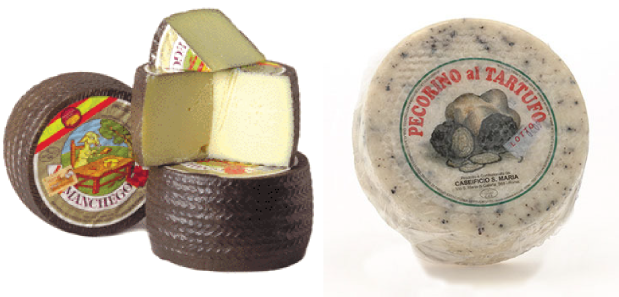
This cheese is produced in the La Mancha region from pasteurized sheep's milk. It has a black gray or buff colored rind with a crosshatch pattern, the interior ranges from stark white to yellowish, depending on age. The aroma should suggest lanolin and roast lamb. The final cheese is usually smeared with olive oil and surface mould is removed. It has a number of holes and a mild, slightly briny, nutty flavor. It is sold at various stages of maturity: at the age of 13 weeks it is described as curado (cured) and, when over three months old it is referred to as viejo (aged). There is a peppery bite to cheeses that have reached a great age. It is best known of a series of sheep's cheeses and is similar to Zamorano, Cadiz, Calahora or Castelleno.
 

Country:

Spain

Milk:

ewe milk

Texture:

hard

Fat content:

57 %


top

Marble Cheddar

Description:
Marble Cheddar has a flavor that changes from mild to sharp. The cheese is orange and white in color and it is only a version of traditional Cheddar.
 

Country:

England

Milk:

cow milk

Texture:

hard

Fat content:

48 %


top

Marbled Cheeses

Description:
Blends of Colby and Monterey Jack, Cheddar and Mozzarella, or white and gold Cheddar curds. These cheeses vary in textures that can be either creamy or firm. They usually have mild flavors and they are used for sandwiches, melting or snacking.


top

Mascarpone

Description:
A soft, white, fresh, vegetarian, cream cheese from the Lombardy region of southern Italy. In fact, it is not cheese at all, but rather the result of a culture being added to the cream skimmed off the milk, used in the production of Parmesan. It is, however, described as a curd cheese, although it is made in much the same way as yogurt. To make Mascarporne cheese tartaric acid (natural vegetable acid derived from the seed of the tamarind tree) is needed. After the culture has been added, the cream is gently heated, then allowed to mature and thicken. This whitish to straw-yellow, creamy, mild fresh cheese is compact, but supple and spreadable and it is added to famous Italian desserts, sometimes accompanied by cognac. Frequently it is used for the preparation of certain dishes and sauces. It takes only a few days to ripen and has a fat content of 75 per cent.
 

Country:

Italy

Milk:

cow milk

Texture:

soft

Fat content:

75 %


top

Monterey Jack

Description:
The Monterey Jack was developed by a Californian Scot, David Jacks in 1882 (some sources state 1916). Monterey Jack's consistency depends on its maturity; most softer varieties (common in American supermarkets) is aged for one month, while grating Jack is aged for upwards of 6 months. Older Jacks are smeared with oil and pepper to maintain softer rinds. Monterey Jack has a buttery, bland taste and melts easily. Fat content is 25 per cent water content is 45 per cent.
 

Country:

United States

Milk:

cow milk

Texture:

semi-hard

Fat content:

25 %


top

Morbier

Description:
A semi-soft, unpasteurized, creamery, cow's milk cheese from Franche-Comte. The yellow-brown or pale gray rind is thick, moist and leathery. It has a creamy brown crust, the interior is two layers of glossy, yellowish-ivory paste, separated by a thin flavorless layer of ash. This separates the morning milking from the evening milking. It is a creamy cheese with a flavor of nuts and fruit and an aroma of fresh hay. The cheese is elastic and springy, with a pungent, yeasty aroma and a sweet, fruity taste.
 

Country:

France

Milk:

cow milk

Texture:

semi-soft

Fat content:

45 %


top

Mozzarella

Description:
The plastic, spun-curd buffalo milk cheese Mozzarella, originated from southern Italy. Pasteurized milk is curdled at 90 degrees F and the curd is cut. Extra time in the vat is allowed so that the curd can sink to the bottom and so that the lactic acids can soften the curd to make it easier to knead. The curd is treated with extremely hot water (200 degrees F) and is kneaded into a shiny lump. Bits of the mass are taken off cooled salted and are soon ready to be marketed.
 

Country:

Italy

Texture:

soft


top

Ossau-Iraty

Description:
Ossau-Iraty is a traditional, unpasteurized, semi-soft cheese made from sheep's milk. It usually has a shape of a wheel, with natural rind. This cheese is made with the milk of Manech ewes. There are three main sizes: small (Petit-Ossau-Iraty-Brebis Pyrenes), intermediate (non-fermier), large (fermier). Affinage takes at least 90 days, 60 days for the small version. The temperature of the cellar must be below 12 C. This cheese unites two regions of France in the Western Pyr n es: Ossau in the valley of the Bearn and Iraty in the beech forests of the Pays Basque. The cheese is full of a delicious, nutty, robust taste if it is produced during the period from June to September when the herds move up to the high mountain meadows.
 

Country:

France

Milk:

ewe milk

Texture:

semi-hard

Fat content:

50 %


top

Parmesan

Description:
Named after an area in Italy, Parma Parmesan is one of the world's most popular and widely-enjoyed cheeses. Milk used for Parmesan is heated and curdled in copper containers but not before most of the milk's cream has been separated and removed. Curd is cut and then heated to 125 degrees F, all the while stirring the curd to encourage whey runoff. The curd is further cooked at temperatures of up to 131 degrees F, then pressed in cheesecloth-lined moulds. After two days, the cheeses are removed and salted in brine for a month, then allowed to mature for up to two years in very humid conditions.
 

Country:

Italy

Milk:

cow milk

Texture:

hard


top

Provolone

Description:
Provolone is an all-purpose cheese used for cooking, dessert purposes and even grating. It is traditional, creamery, stretched, curd cheese. This cheese appears in various shapes. The thin, hard rind is golden-yellow and shiny. Sometimes it is waxed. Provolne cheese can be of various types. Dolce (mild Provolne) is aged for two to three months, and it is supple and smooth with a thin waxed rind. It is generally used as a table cheese. Aged for six months to two years, it is darker with small holes and a spicy flavor.
 

Country:

Italy

Milk:

cow milk

Texture:

semi-hard


top

Raclette

Description:
Raclette is a cow's milk cheese that has a light-brown rind and a firm texture. It has a round or square shape with smooth, pink to deep orange, slightly sticky, natural rind. Although the cheese has a pleasant enough flavor, it is not special until it is heated in front of a fire or under a hot grill. Then the full nutty, sweet and slightly fruity aroma intensifies and the elasticity of the melting cheese makes it truly magnificent. It is used in a dish called raclette, the name is derived from the French verb racler (to scrape). Also known as Valais Raclette, the generic class name is Walliser. It is a hard cheese with a subtle flavor, good aftertaste and firm texture. Raclette is pale yellow inside. Raclette is famous for a Swiss dish, made by melting thin slices over broiled potatoes.
 

Country:

France

Milk:

cow milk

Texture:

hard


top

Ricotta

Description:
Traditional, creamery, whey cheese made from cow's milk. It is a basin-shaped cheese, pure white and wet but not sticky. Good Ricotta should be firm, not solid and consist of a mass of fine, moist, delicate grains, neither salted nor ripened. It is white, creamy and mild and is primarily used as an ingredient in lasagna. It is primarily made with cow's milk whey which is heated to 170 degrees F. Citric acid is added to encourage destabilization and separation and the temperature is quickly raised to 185 degrees F. Proteins from the whey separate rise and coagulate; the proteins (lactalbumin) are skimmed off and put in a wicker basket to drain for two days after which the "cheese" is ready for market. There are three distinct varieties of ricotta: ricotta salata moliterna (ewe's milk whey), ricotta piemontese (cow's milk whey + 10% milk) and ricotta romana (a byproduct of Romano cheese production).
 

Country:

Italy

Milk:

cow milk

Texture:

soft


top

Ridder

Description:
A Norwegian version of Saint Paulin with a much higher fat content. It is a modern, creamery, semi-soft cheese made from cow's milk. It has a shape of wheel with sticky, orange, washed rind. This cheese was invented by Sven Fenelius, a Swedish cheesemaker. Ridder is open textured and elastic, not unlike the French Saint-Paulin with a buttery feel and sweet-savory taste. The aroma can be very strong if the cheese is left wrapped in plastic for too long. This cheese ripens in three months.
 

Country:

Norway

Milk:

cow milk

Texture:

semi-hard

Fat content:

60 %


top

Romano

Description:
One of the oldest Italian cheeses. It is made by a special method, known as "rummaging curd" or draining the curd quickly after molding, then piercing the surfaces slightly before salt is applied. In Europe, Roman is known by its original name Pecorino-Romano.
 

Country:

Italy

Milk:

cow milk

Texture:

hard

Fat content:

27 %


top

Roquefort

Description:
Roquefort is considered as the "King of cheeses". It has a tingly pungent taste and ranks among blue cheeses. Only the milk of specially bred sheep is used and is ripened in limestone caverns. It has the cylinder-shape with sticky, pale ivory, natural rind. Ripe Roquefort is creamy, thick and white on the inside and have a thin, burnt-orange skin. The ripening of the cheeses is in the natural, damp aired caves found under the village of Roquefort-sur-Soulzon. It is the quality of the milk, the processing of the curd, the adding of Penicillium roqueforti and finally the ripening in natural caves that give us this unique and remarkable cheese. The exterior aspect of a Roquefort should be white and faintly shiny. The p t should be cohesive, at the same time slightly crumbly. This cheese has a distinct bouquet and a flavor that combines the sweet burnt-caramel taste of sheep's milk with the sharp, metallic tang of the blue mould. Also frequently added in dressings and salads.
 

Country:

France

Milk:

ewe milk

Texture:

semi-hard


top

Roule

Description:
This cheese has been created recently by Fromagerie Triballat in Loire. It is usually produced in logs of various sizes, rolled in fresh herbs. The cheese has a soft texture and refreshing herb and garlic layer. It is very tasty with beer or glass of wine.
 

Country:

France

Milk:

cow milk


top

Sbrinz

Description:
The oldest of the Swiss cheeses that has its origin in Roman times. Sbrinz is aged from 18 months to 3 years. It has a rich flavor and is very mellow and tangy. Softer younger versions are known as Spalen.
 

Country:

Switzerland

Milk:

cow milk

Texture:

hard


top

Shropshire Blue

Description:
The cheese was invented in Scotland at the beginning of the century. It is one of the vegetarian, creamery blue cheeses made from cow's milk. The cheese has a mild flavor and fantastic taste. Thanks to annato, the cheese has a deep orange-brown, natural rind. Shropshire Blue matures for a period of ten weeks and the content of fat is about 34 per cent.
 

Country:

Great Britain

Milk:

cow milk

Texture:

hard

Fat content:

34 %


top

St. Agur Blue Cheese

Description:
A medium strong creamy blue cheese, made from cow's milk in Auvergne. It is excellent with full bodied red wines, great on bread for a snack or in a salad. Hard to find and extremely likable. Could be used as a more delicate substitute for Gorgonzola in sauces when Dolcelatte is out of season or too strong. The cheese has a very strong and spicy taste when rippens.
 

Country:

France

Milk:

cow milk


top

Stilton

Description:
Historically referred to as "The King of Cheeses" Stilton is a blue-mould cheese with a rich and mellow flavor and a piquant aftertaste. It has narrow, blue-green veins and a wrinkled rind which is not edible. Stilton is milder than Roquefort or Gorgonzola, and is equally excellent for crumbling over salads or as a dessert cheese, served with a Port Wine. There are two types of Stilton: Blue and White Stilton. Rennet is added to milk at 86 degrees F and after an hour curd forms. The curd is drained and moulded. One week passes and then Stiltons are allowed to mature for 6 to 8 months.
 

Country:

England

Milk:

cow milk

Texture:

semi-hard

Fat content:

55 %


top

Tete de Moine

Description:
This cheese has been made already for centuries. It is a full-fat cow's milk cheese of round shape originated in Switzerland. The color is ivory to pale yellow. Little slices are cut off and eaten alongside fresh or dried fruit. The slices are cut off by means of rotating knife. The cheese is very tasty and the period of maturation is about three to four months.
 

Country:

Switzerland

Milk:

cow milk

Texture:

semi-hard

Fat content:

50 %


top

Tilsit

Description:
Creamery, semi-hard cheese made from cow's milk. It has a wheel-shape, the thin, dry, yellow-beige crust has some moulds. This cheese was discovered by Dutch cheesemakers, living in Tilsit which was then in East Prussia. The cheese is washed and brushed regularly for the first two months so that the crusty rind forms. This protects the smooth, supple interior with its tiny, irregular holes from drying out. The aroma is mildly pungent while the taste is buttery and fruity with a spicy tinge. It is generally made with whole milk. A natural hard cheese, German Tilsit has a stronger flavor than its Scandinavian cousins. It has tiny hole formation and a firm texture, suitable for slicing. Tilsit is an excellent sandwich cheese, good with robust wine or beer. It has a fat content of 20 per cent and water content of 50 per cent.
 

Country:

Germany

Milk:

cow milk

Texture:

semi-hard

Fat content:

20 %


top

Wensleydale

Description:
Traditional, hard cheese made from cow's milk. It has a shape of cylinder with natural rind. Wensleydale can be used as table cheese and is very tasty with apple pie. This cheese is based on the recipe that can be traced back to the Cistercian monks who came over with William the Conqueror in the 11 century. There are two types of the British classic Wensleydale: White, a flat disc that is highly-pressed and has a honey flavor to it and Blue or Yorkshire, which has blue veins, double cream and is a cousin of Stilton - the blue variety comes in large drums. Good Wensleydale has a supple, crumbly, moist texture and resembles a young Caerphilly. The flavor suggests wild honey balanced with a fresh acidity. It matures in two to four months and has a fat content of 45 per cent.
 

Country:

England

Milk:

cow milk

Texture:

hard

Fat content:

45 %